The Carian Rock Tombs of Kaunos: A Day Trip Guide from Marmaris


 React
The first time you see them, it is usually from a small boat. The engine slows, the reeds part, and there on the cliff above the river are rows of temple fronts carved straight into the rock: columns, pediments and doorways, glowing in the morning sun. For a moment everyone on board stops talking.
These are the rock tombs of Kaunos, cut into the cliffs above the Dalyan river around 2,400 years ago. They are about an hour and a half from Marmaris and one of the most memorable sights on this coast. This guide explains what they are, how and why they were carved, the best ways to see them and how to plan a visit from Marmaris in 2026. For the full practical guide to the day out, including mud baths and Turtle Beach, see our Dalyan day trip guide.
Quick facts
| Where | On the cliffs opposite Dalyan town, above the Dalyan river, Muğla province |
| Age | Around 2,400 years; mainly 4th century BC |
| Distance from Marmaris | About 80 km, roughly 1 hour 15 minutes by road |
| Best views | From a river boat or the Dalyan riverfront |
| Seeing the tombs | Free from the river or the town |
| Kaunos ancient city entry | €3 (about $3.50) |
| Day tour from Marmaris | 1,000-1,950 TL ($20-39) per adult |
| Status | Kaunos is on UNESCO’s World Heritage Tentative List |
Where are the tombs and how do you get there?
The tombs are carved into the cliff on the west bank of the Dalyan river, directly opposite the small town of Dalyan. They belong to the ancient city of Kaunos, whose ruins spread over the hill behind them.
On a day tour from Marmaris: the easiest option. Tours go either by coach to Dalyan or by boat along the coast, and almost all include a river boat trip that passes right below the tombs. In 2026, tours cost around 1,000-1,950 TL ($20-39) per adult, depending on the format and what is included. Bookable options include the Dalyan and İztuzu tour by boat and the Turtle Beach tour with lake and mud baths.
Independently: drive about 80 km (roughly 1 hour 15 minutes) from Marmaris via Köyceğiz to Dalyan. From the riverfront, you can see the tombs across the water, or join one of the river boats run by the local cooperative for a closer view.
A short history
Kaunos was founded in the first millennium BC on what was then the sea coast, at the border between two ancient regions: Caria to the west and Lycia to the east. It grew into a busy port, known for its salt production and trade across the Mediterranean. Over the centuries the river silted up, the coastline moved several kilometres south, and the once-thriving harbour city was left stranded inland among the reeds.
The rock tombs were carved mainly in the 4th century BC for the city’s most powerful families. Placing them high on the cliff, facing the river and the harbour, made them a permanent statement of status: every ship arriving in Kaunos sailed beneath them. Locals still call the largest of them the “King’s Tombs” (Kral Mezarları).
How the tombs were carved
The finest tombs imitate the front of a Greek temple: two Ionic columns supporting a triangular pediment, with a doorway leading into a small burial chamber cut into the rock. The architecture is Carian in spirit but strongly influenced by Lycian rock tombs, a mix that reflects Kaunos’s position on the border between the two cultures.
Look closely and you will notice that not every tomb is finished. One of the most interesting is left incomplete, which shows how the stonemasons worked: they carved from the top down, shaping the pediment first and working their way towards the ground. Smaller and simpler tombs, little more than doorways in the rock, are scattered across the cliff around the grand temple-fronted ones.
The tombs have suffered over the centuries from weathering, earthquakes and, more recently, visitors climbing on them. Today the authorities restrict access to protect them, which is one more reason the best way to see them is from below.
Best ways to see the tombs
- From a river boat: the classic view. Boats pass close below the cliff, and most captains slow down or stop for photos.
- From the Dalyan riverfront: the promenade in Dalyan town looks straight across at the tombs. It is free, and lovely with a coffee or an evening drink.
- From the ancient city of Kaunos: parts of the site give a different, higher perspective over the river and the delta.
The tombs face east across the river towards Dalyan, so they are best lit in the morning, when the sun falls directly on the façades. By late afternoon the cliff slips into shade, although the soft evening light from the riverfront has its own charm.
Visiting the ancient city of Kaunos
Most day tours show you the tombs from the river but do not go into the ancient city itself. If you have the time, it is well worth a visit. Boats take about ten minutes from Dalyan, followed by a walk of around fifteen minutes along a tree-lined path to the entrance.
Highlights include:
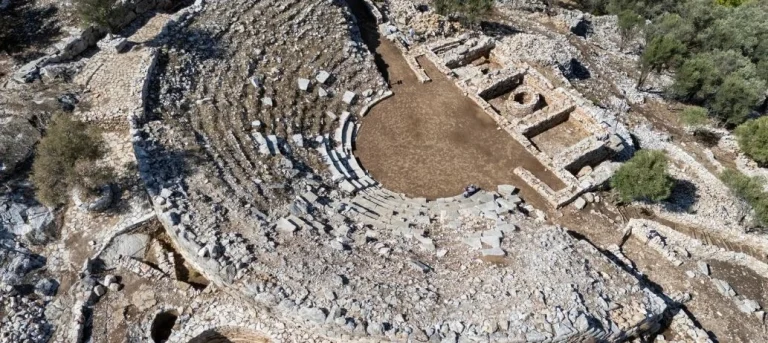
- The theatre, built into the hillside, which once held around 5,000 spectators.
- The Roman baths and a Byzantine basilica.
- The agora and the sanctuary of Demeter.
- The ancient harbour, now a reedy lake, a reminder of how far the coastline has moved.
- Mosaics around 1,300 years old.
Entry costs €3 (about $3.50) for foreign visitors; Turkish citizens enter with the Museum Card. Allow at least an hour and a half for the site, wear shoes with grip and bring water: there is little shade.
Photo tips
- Use a short telephoto (or your phone’s 2x-3x lens) to fill the frame with the façades.
- Include the reeds or a passing boat in the foreground for scale and atmosphere.
- Shoot in the morning, when the sun falls directly on the façades.
- On a moving boat, use a fast shutter speed and ask the captain to slow down.
- Vertical shots suit the height of the cliff.
- Keep your camera in a dry bag; splashes happen in busy channels.
2026 prices
| Item | 2026 price | Approx. USD |
|---|---|---|
| Viewing the tombs from the river or Dalyan town | Free | Free |
| Kaunos ancient city entry (foreign visitors) | €3 | ~$3.50 |
| Group day tour from Marmaris (incl. river boat) | 1,000-1,950 TL | $20-39 |
Practical tips
- Spring and autumn are the most comfortable seasons; summer is hot and busy.
- Bring sunscreen, a hat and water; there is little shade by the river or at Kaunos.
- Do not climb on the tombs or cross barriers; the site is fragile and protected.
- Drones need a permit at archaeological sites.
- If Kaunos matters to you, choose a tour that includes the ancient city, or visit independently.
Nearby places worth combining
- The Dalyan mud baths and İztuzu Beach, the protected nesting beach of loggerhead turtles. Both are covered in our Dalyan day trip guide.
- Köyceğiz Lake, the large freshwater lake that feeds the Dalyan river.
- Back in Marmaris: the castle and museum, with finds from Knidos and other ancient cities of the region.
- Other ancient sites near Marmaris: Loryma, Hydas and Knidos.
- Sedir (Cleopatra) Island, with its golden sand beach and ancient ruins; see the Cleopatra Island boat trip.
Frequently asked questions
Where are the Carian rock tombs?
On the cliffs opposite Dalyan town, above the Dalyan river, about 80 km from Marmaris. They belong to the ancient city of Kaunos.
How old are the Kaunos rock tombs?
Around 2,400 years old. Most were carved in the 4th century BC.
Are they Carian or Lycian?
Both, in a way. Kaunos was a Carian city on the border with Lycia, and its tombs combine Carian traditions with the temple-fronted style typical of Lycian rock tombs.
Can you go inside the tombs?
No. Access is restricted to protect them. They are best seen from the river or the Dalyan riverfront.
How much does it cost to see them?
Viewing from the river or the town is free. Entry to the ancient city of Kaunos costs €3 (about $3.50), and a day tour from Marmaris costs around 1,000-1,950 TL ($20-39).
Can I visit from Marmaris in a day?
Yes. A Dalyan day tour from Marmaris takes 9-11 hours and almost always includes a river boat past the tombs.
Plan more days out
For other excursions, see our guide to Marmaris boat trips and the full list of things to do in Marmaris. For the bigger picture, start with the Marmaris Travel Guide.