Knidos Ancient City


 React
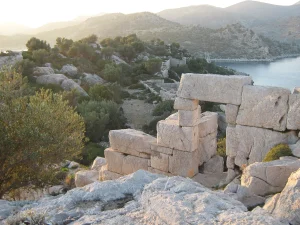
ReactKnidos Ancient City sits at the Aegean’s bright, windy edge. Here, stone meets sea in a dramatic embrace. The light feels sharper on this lonely cape. Waves glitter beside broken columns and marble drums. You walk along terraces carved into a rocky hill. Two harbors hold the city like open palms. The air smells of thyme and salt. Cicadas buzz among low shrubs in summer. Every step suggests trade, ritual, and coastal life. Artists and sailors once praised this legendary place. The goddess had a famous home here. The city still whispers her myth today.
Where is it and How to Get There?
Knidos lies at the tip of the Datça Peninsula. It faces open water and steady winds. The setting feels remote and striking. You reach it by road from Datça town. The final kilometers are narrow and winding. Drive carefully and watch for goats. Parking sits near the site entrance. Services are simple and seasonal out here. In summer, small boat tours may visit. Some depart from Datça or nearby villages. Private boats often anchor in calm weather. Taxis can be arranged from Datça as well. Public transport options remain limited and irregular. Independent travel offers the best flexibility.
A Brief History
Knidos was a proud Dorian city. It prospered in Classical and Hellenistic times. Trade flowed through its twin harbors. Merchants brought wine, oil, and fine pottery. Philosophers and astronomers also worked here. The city valued art and calculated stars. Knidos became famous for Aphrodite’s cult. A celebrated statue drew visitors and praise. The original statue is now lost. Copies and texts preserved its graceful fame. Earthquakes and shifting trade weakened the city. Roman and Byzantine layers mark later phases. Over time, the population dwindled and dispersed. Ruins slept under wind and scrub. Travelers and archaeologists later revealed its plan.
Architecture and Artistic Features
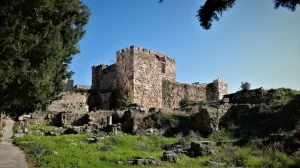
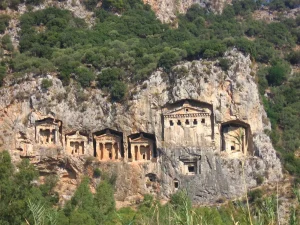
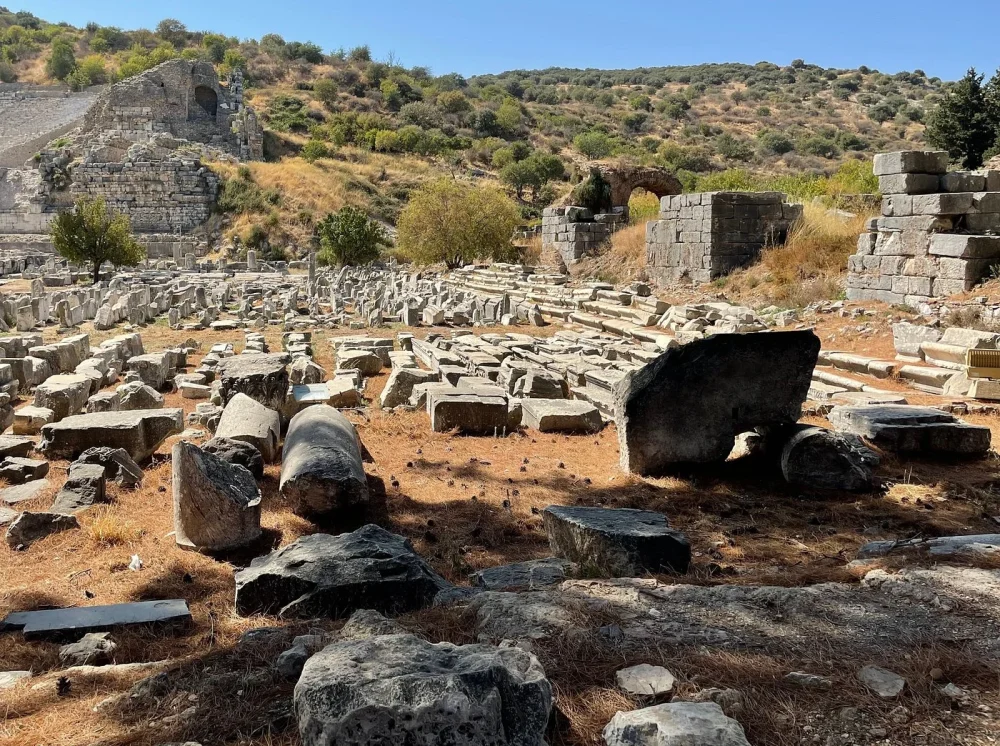
Knidos rose on terraces facing the sea. Streets stepped upward across the slope. The plan followed a careful civic order. You can trace avenues and house blocks. Public spaces cluster near the harbor neck. Stoas once shaded markets and civic life. The city walls guarded high ridges. A broad agora anchored political activity. Two harbors shaped daily rhythms and trade. The military harbor offered greater protection. The commercial harbor welcomed routes across the Aegean. A theater overlooks water and distant islands. Climb to the top rows for views. An odeon hosted music and civic gatherings. Temples honored Apollo and other gods. Aphrodite had a special circular shrine. The podium and plan remain suggestive today. Craftsmen worked marble with refined detail. Fragments show elegant moldings and careful joints. Workshop areas likely stood near the port. A lighthouse guided ships past the cape. Its position marked dangerous currents and rocks. Terraced houses used local stone and plaster. Cisterns collected precious winter rainwater. Necropolis zones line approaches outside town. Tombs vary from simple to monumental. The landscape frames everything with blue horizons. Architecture and setting feel inseparable and balanced.
Visitor Information
Plan your visit with comfort and safety in mind.
- Opening hours vary by season and daylight.
- Arrive early or late for softer light.
- A paid entry is usually required.
- Carry cash in Turkish lira if possible.
- Wear sturdy shoes for uneven ground.
- Bring water, sunscreen, and a hat.
- Shade is limited across the terraces.
- Restrooms are near the entrance area.
- Onsite services may be seasonal and simple.
- Watch footing on loose gravel and steps.
- Respect barriers and signed restricted zones.
- Drones may require permissions or be restricted.
- Guided services may be available on arrival.
- Phone signal can be weak near the tip.
- Check sea conditions if arriving by boat.
- Anchoring rules may change with local authorities.
- Snorkeling can reveal submerged blocks near shore.
- Take only photos and leave no trace.
Photo Spots and Tips
Start at the theater’s upper seats. The harbors curve into perfect lines. Early light adds texture to stone. Midday glare flattens tones and shadows. Evening brings gold across the terraces. The circular Aphrodite precinct photographs beautifully. Use a wide lens for context. Step closer for weathered details and grain. Capture columns against open water backdrops. Try low angles for dramatic skies. Include paths to lead the eye. Goats sometimes wander into frames charmingly. The lighthouse cliffs glow at sunset. Be cautious near edges and drop offs. Wind can be strong and gusty. Stabilize your camera when it blows. Protective filters help with sea spray. Keep spare batteries and a cloth. Respect the site while composing shots.
Other Nearby Places to Visit
Explore Old Datça with its stone lanes. Bougainvillea colors doorways and quiet corners. Cafes serve simple, fragrant meals. Palamutbükü offers famously clear water. Pebbles shine through bright, calm shallows. Mesudiye has Ovabükü and Hayıtbükü coves. Families love their protected, gentle beaches. The Knidos lighthouse viewpoint sits beyond. The coastline feels wild and open. Bozburun Peninsula charms with quiet villages. Wooden boatyards line sheltered bays. The road rewards patient drivers with views. Amos Ancient City rests near Turunç. A small theater overlooks a pretty bay. Marmaris hosts a castle and museum. The harbor buzzes with restaurants and boats. Day trips pair well with a Knidos visit. Choose what fits your pace and style.
Knidos rewards slow steps and curious eyes. The setting does half the magic. The remains do the rest with ease. You feel the city’s mind and heart. Practical choices shaped life beside the sea. Beauty rose from craft and smart planning. That harmony still speaks across the stones. If you visit Datça or Marmaris, include Knidos without hesitation. Let the twin harbors frame your day. For more travel ideas, read our Datça places to visit guide.
React